
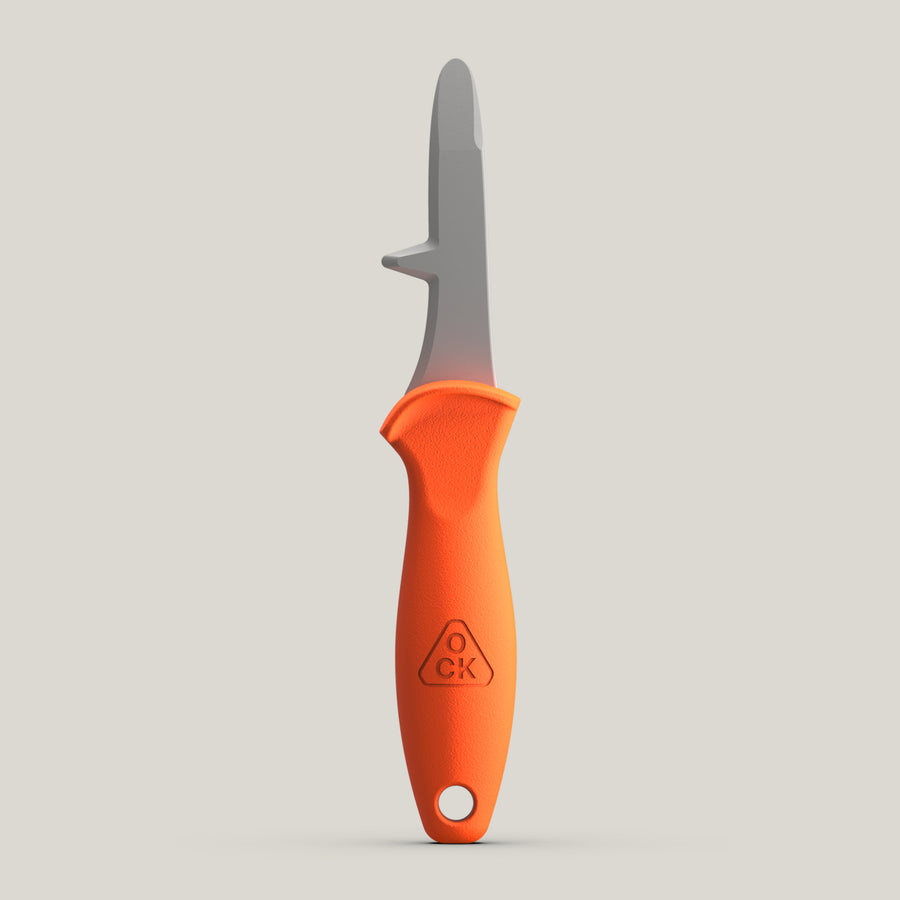

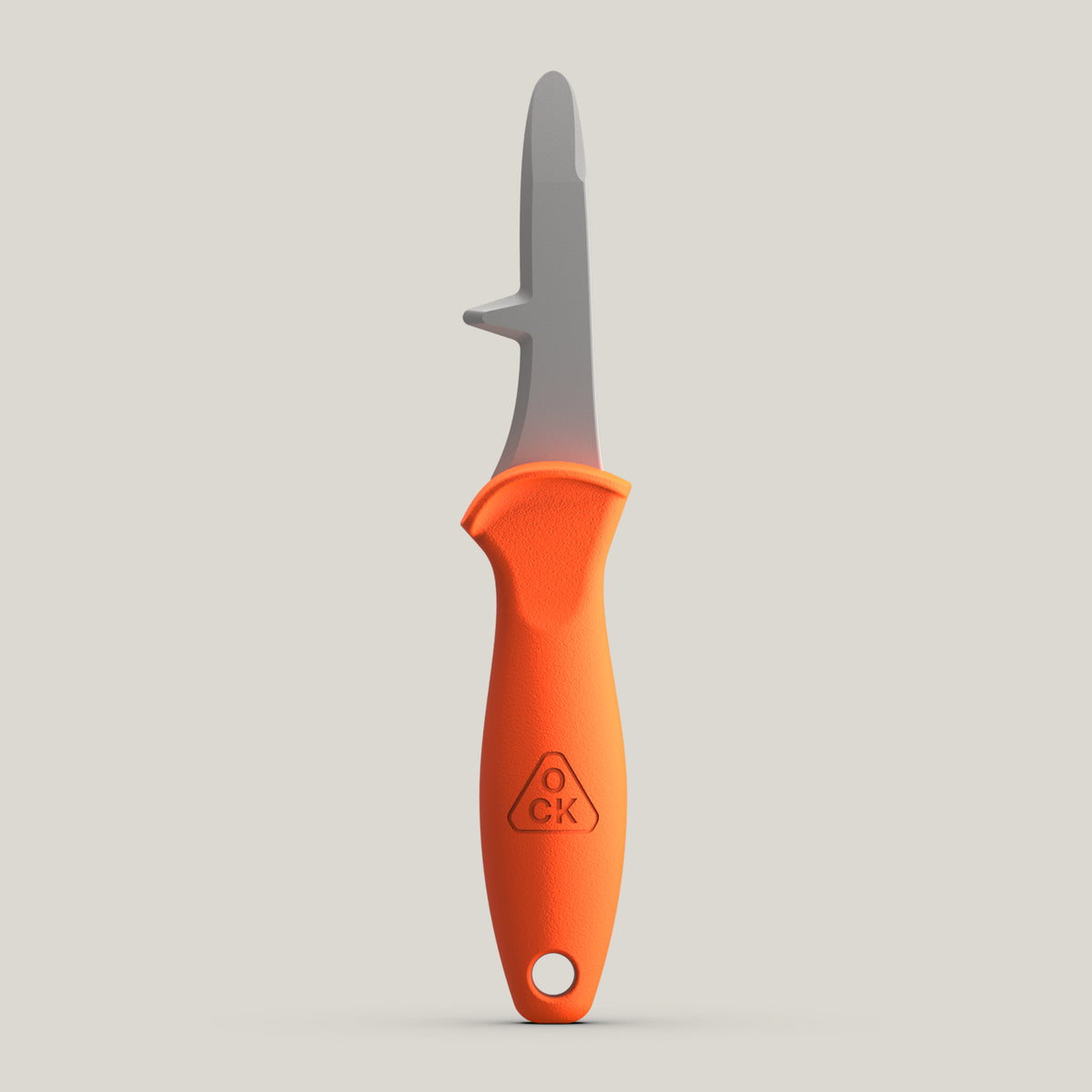


OCK Oyster Knife
Less force. More finesse. It looks different, feels different, and yeah, it shucks different. Safer for your first dozen. More efficient, less strain for your thousandth.

Opens all kinds of oysters. East Coast and West Coast, wild and farmed, petite and grande, cupped or flat. Redesigned ergonomics means less force, fewer slips, and more control, built for a safe and confident shuck.
Stainless steel blade with a bead blast + stone wash finish. Food-grade polypropylene handle with a non-slip Mold-Tech texture. 9" overall: a 3.75" blade and a 5.25" handle. Full details below.
Dishwasher safe, but we recommend you rinse after use, wipe clean, and dry thoroughly to prevent wear. The stainless steel blade resists corrosion, but avoid prolonged moisture and store dry.
Ships in 1–2 business days. Free standard shipping on orders $75+. Unused items can be returned within 30 days.
“We kept seeing the same things: generic ergonomics, force over control, and unnecessary cuts.”
We've worked on oyster grants and behind raw bars. In places where the tool you use matters. And we kept seeing the same things: generic ergonomics, force over control, and unnecessary cuts.
We believed shucking could feel calmer.
More controlled. More intentional.
So we designed a knife to match the work:
Safe, clean, and compact shucking.
Every shucker has a story about the slip.
Our research started with people: raw bar shuckers, home cooks, first-timers. We talked, watched, and ran surveys. The same three things kept coming up.
Most trouble starts with too much pressure. Then one of three things happens: the blade slips too far and bursts the belly, your knuckles smack into the shell, or worse, you slip out of the hinge and find your palm.
One slip, and it's a summer weekend in the ER.A raw bar shucker can open 1,000 oysters in a single day. Over time, that repetitive strain on the wrist takes a real toll. We've seen shuckers need wrist surgery, and longtime shuckers with “lobster claw,” a hand that locks and cramps.
Every oyster, the same twist.A few oyster knives take a different approach. Most are nearly identical: a sharp point that takes all the pressure, and a short, hourglass-shaped handle that aims your hand right at the oyster.
Inherited, not designed.Designed around the hand.
Four things change when you shuck with the OCK Oyster Knife.
Safer hands
A guard built into the handle, and a technique that keeps both hands out of harm’s way.
More control
A precision grip. Thumb and pointer finger pinch, and the handle locks into your palm.
Easier on the body
Shuck on the counter with your arm resting at your side, two hands sharing the work.
Kinder to the oyster
A short blade made to pop the hinge, with no razor edge, so the belly stays whole.
The details
Everything you'd want to know before it's in your hand.

Questions, answered.
The things people ask most.
How do I learn to shuck oysters?+
Is this knife good for beginners or expert shuckers?+
What types of oysters does this knife work with?+
How sharp is the knife blade?+
Can left-handed shuckers use it?+
Yes. It's ambidextrous by design, so it works the same in either hand.
What if it isn't right for me?+
Unused items can be returned within 30 days. Have a question first? Email us. We're shuckers too.


