The Magic Behind Oysters
Oysters are incredible creatures that have the ability to improve water quality, fight back against the impacts of climate change, and build habitats. Oysters belong to a group of molluscs known as “bivalves”. Bivalves have a hinged pair of half-shells known as valves that allow them to filter food from the water column and dispose of waste. Oysters feed on microscopic phytoplankton, algae, and zooplankton and can filter up to 50 gallons of water per day. In turn, oysters filter these microbes out of the water column. This improves water quality and clarity and can help prevent algal blooms that have become more common with climate change.
[Insert]
Often referred to as “ecosystem engineers”, oysters create reefs by settling on old shells and forming complex structures. These constructions provide habitat to other oysters and a wide variety of fish, shellfish and marine creatures. These restorative qualities aren't unique to wild oysters. Recently, many researchers have begun embracing the term "restorative aquaculture” in describing the ecological benefits of oyster farming.
What is Restorative Aquaculture & How do Oyster Restore Water Quality?
According to The Nature Conservancy, “Restorative aquaculture occurs when commercial or subsistence aquaculture provides direct ecological benefits to the environment, with the potential to generate net-positive environmental outcomes.” In other words, when aquaculture provides more ecological benefit than harm, it can be considered “restorative aquaculture”.
[Insert]
This applies to many forms of bivalve aquaculture (oysters, clams, scallops, and mussels). Kelp farming is also considered a form of restorative aquaculture as it provides habitat and reduces ocean acidification through carbon absorption. Researchers consider oyster aquaculture restorative for a number of reasons. In addition to improving water quality through filter feeding, farmed oysters can reseed wild populations. Many farmed oysters produce larvae that attach to wild oyster reefs and grow into healthy, adult oysters. This isn’t the case for all farmed oysters, and you can check out this video by the Maine Aquaculture Innovation Center to learn more about diploid and triploid oysters.
[Insert Image - Restoration Projects]
Some organizations, such as the Massachusetts Oyster Project and Billion Oyster Project, have focused entirely on oyster restoration. These efforts often involve building oyster reefs from recycled shells or re-seeding wild populations to re-establish wild oyster reefs that have been hard hit by overharvesting, coastal development, and climate change.
The Oyster Boom and Bust
Oysters weren’t always considered a luxury food. Until the late 1800s, oysters were known as a cheap, abundant source of protein. Workers would often gather at oyster houses or visit street carts after work, chowing down on oyster stews and pies. The oyster soon made its way into high-class dining rooms, used as a substitute for escargot, leading to the development of iconic late Gilded-Age recipes such as “Oyster Rockefeller”. Oysters soon gained the nickname “white gold”. To keep up with the new heightened demand, destructive practices such as oyster reef dredging became popular. Towns such as Wellfleet gained global acclaim, and Cape Cod oysters were shipped across the pond to regions across Europe.
[Insert]
However, the growing demand for oysters soon led to the overharvest of wild populations across the US. Oyster reefs collapsed from dredging and overharvesting and weren’t able to recuperate on their own. Disease exacerbated by coastal runoff and pollution also contributed to population declines through the mid-20th century. What was once a cheap, plentiful food became expensive and inaccessible to many. With the collapse of wild oyster reefs came the need for oyster aquaculture and the introduction of new cultivation techniques.
[Insert]
The Oyster Comeback
Oyster aquaculture is nothing new in New England. On Cape Cod, Indigenous people have grown oysters and clams for over 3,000 years and the Mashpee Wampanog people continue to rely on these techniques for cultivation today. When wild oyster populations began to decline in the 1800s, some oyster companies such as Cotuit Oyster Company began looking to Indigenous oyster farming techniques. Other New England farms looked to Louisiana, which adapted oyster farming methods from Slovenian and Croatian immigrants. Over time, oyster farms and grants became more popular on Cape Cod and the industry started to rebound. The Cape’s cold, nutrient-rich waters made the region an excellent candidate for growing farmed oysters. Oyster aquaculture became more and more popular on the Cape, helping reseed wild populations and improving water quality and clarity. Oyster farmers and conservation groups have also been key in advocating for runoff restrictions, helping keep Cape Cod waters clean for farmers and residents alike.
[Insert]
Oyster Aquaculture & Cape Cod Oyster Restoration Projects
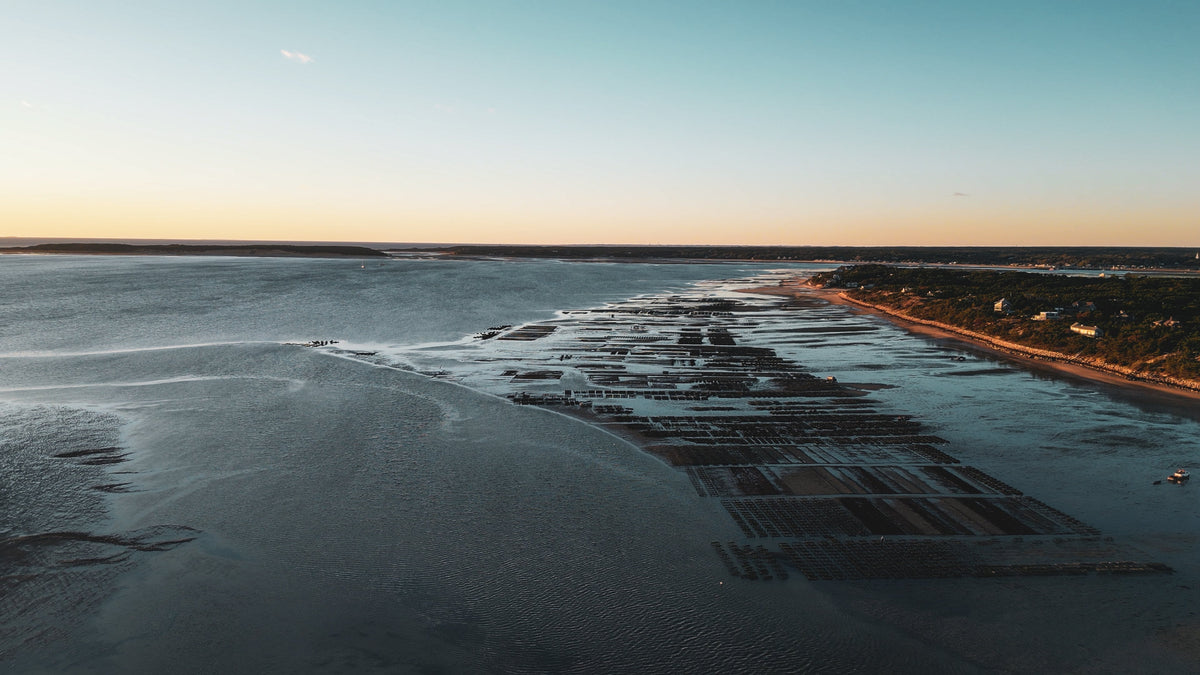
Today, Cape Cod is in its second oyster renaissance with world-renowned farmed oysters, rebounding wild reefs, and a regulated wild oyster fishery. Those with a permit can harvest wild oysters commercially or recreationally. While many farmers were hard-hit by COVID and a sudden loss of restaurant customers, Sea Grant at Woods Hole estimates the industry has rebounded to a pre-pandemic value of $29 million. Several new farms have popped up since COVID, and communities, farmers, and research institutes have worked together to launch innovative restoration efforts. Projects such as the Massachusetts Oyster Project have reseeded wild reefs with thousands of juvenile oysters and developed shell recycling programs for reef construction, using leftover shells from restaurants and raw bars. Towns such as Falmouth have worked on restoring oyster ponds through culvert reconstruction. Wellfleet has even launched green crab removal efforts, targeting an invasive species that preys upon developing oysters. Oyster culture and tourism on Cape Cod are stronger than ever, with oyster tours popping up across the Cape and cultural celebrations such as Wellfleet Oyster Fest bringing in thousands of people from across the Northeast. Through its adoption of restorative aquaculture and outreach to oyster farmers and consumers, the Cape has managed to uplift and transform a once-struggling industry.
[Insert Image - Oyster Farming Cape Cod]
A Growing Oyster Industry
The oyster industry on Cape Cod has come a long way since the wild fishery collapsed. Restorative aquaculture combined with oyster reseeding and reef-building efforts has helped revive wild populations while honoring the Cape’s oyster culture and history. Many oyster growing regions look to Cape as a blueprint for oyster restoration and industry growth. Today, the Cape Cod Oyster industry is valued at nearly 30 million dollars, feeding local residents, hungry tourists, and diners across the world.
[Insert]
Learn More About Cape Cod Oyster Restoration & Outreach Efforts
→ Link to Wellfleet Oyster Alliance
→ Link to MA Oyster Project